Fundamentals
How ultrasonic piezoelectric motors work
The physics of resonant stator actuation
Every electromagnetic motor you have ever used, from the spindle in your hard drive to the servo on a CNC gantry, works the same way: current through a coil creates a magnetic field, that field pushes against a permanent magnet, and the rotor turns. Ultrasonic piezoelectric motors throw out the entire paradigm. There is no coil, no magnet, no rotating shaft (unless you design one in). Instead, a ceramic element vibrates at ultrasonic frequency, and friction transfers that vibration into linear or rotary motion.
This article explains how that works, from the crystal up. If you are evaluating piezo for a design and want to understand the physics before reading a datasheet, start here.
The core mechanism in one paragraph
A piezoelectric ceramic (typically PZT, lead zirconate titanate) is bonded to a metal stator. When an AC voltage at the stator's mechanical resonant frequency is applied to the ceramic, the stator vibrates. The tip of the stator traces an elliptical path at ultrasonic frequency (typically 39-180 kHz). That tip presses against a moving element (the “rail” in a linear motor, or a rotor in a rotary motor). Friction at the contact point converts the elliptical vibration into continuous linear or rotary motion.
The piezoelectric element
The word “piezoelectric” means “pressure electric.” Certain crystals generate a voltage when mechanically stressed (the direct effect), and deform when a voltage is applied (the converse effect). Natural quartz does this weakly. Engineered PZT ceramics do it strongly enough to build motors.
In a Nanomotion-style motor, a thin PZT plate is bonded to one face of a metal stator bar. Electrodes on the ceramic are patterned to excite two orthogonal vibration modes simultaneously: one that makes the stator stretch and compress along its length (longitudinal mode), and one that makes it flex side to side (bending mode). When both modes are driven at the same frequency with a 90-degree phase offset, the ceramic fingers at the end of the stator trace an elliptical path.
From vibration to motion
The key insight: the finger tip moves in an ellipse, not a circle. During the forward half of the ellipse, the finger presses into the rail and pushes it forward by friction. During the return half, the finger lifts slightly off the surface (or at least reduces contact force) and retracts. The net effect is continuous forward motion, much like rubbing your thumb across your fingertip.
This friction-drive mechanism has profound engineering consequences. The motor is self-locking at rest (no power needed to hold position). There are no gears. There is no backlash. The resolution is limited only by the encoder and controller, not by the motor itself. Nanometre-level positioning is routine.
The motor element
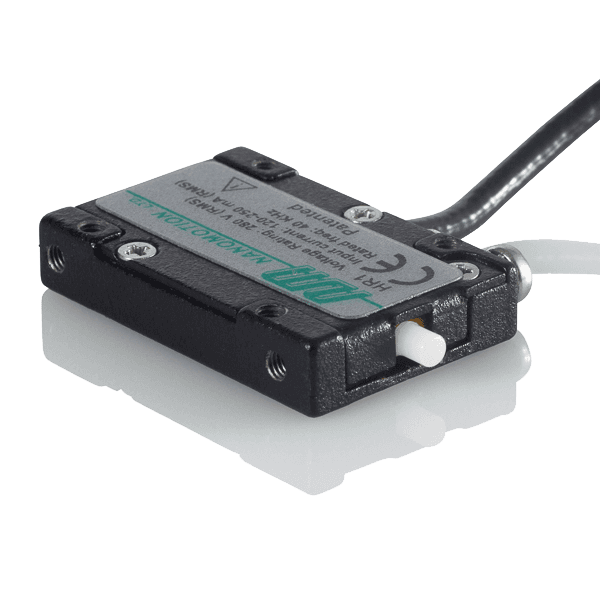
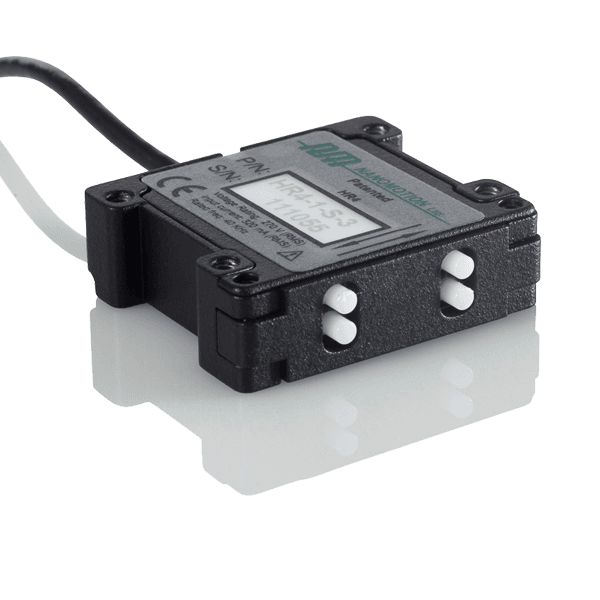
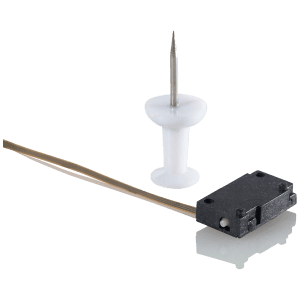
A single motor element is remarkably compact. The Nanomotion HR1 (one finger) is roughly the size of a postage stamp. More force is achieved by adding fingers: the HR2 has two, the HR4 has four, and the HR8 has eight. Each finger presses against the same rail, so force scales linearly with finger count.
Inside a complete motor assembly
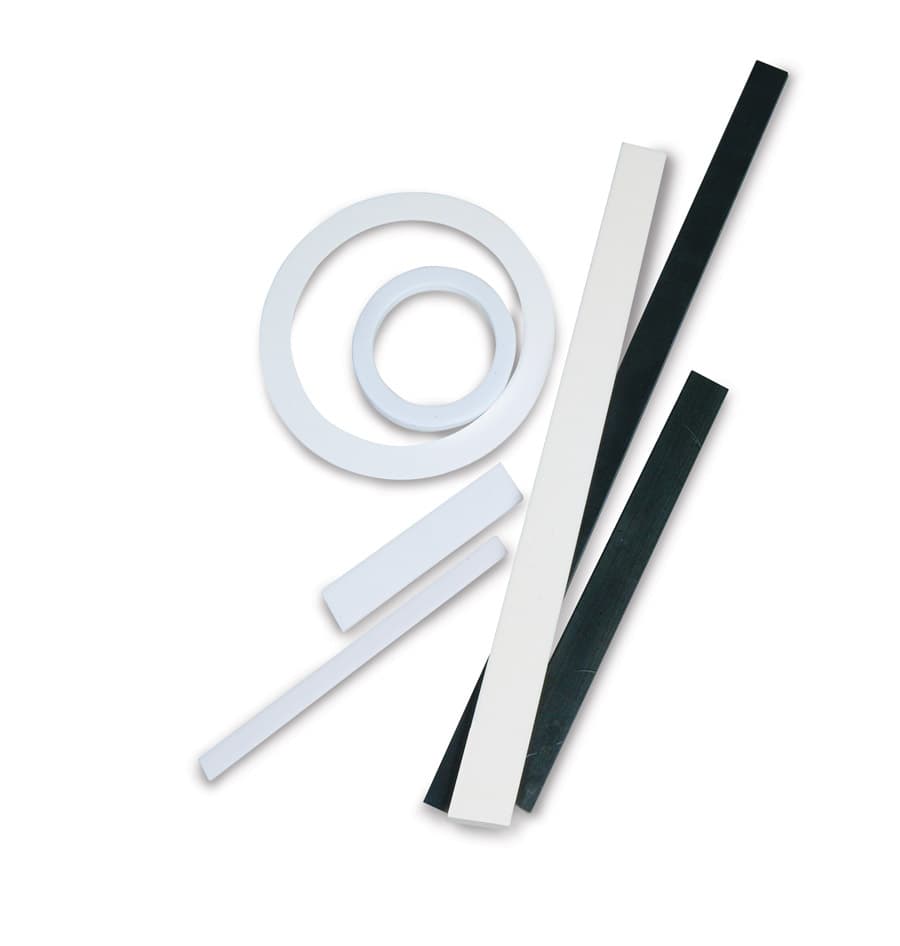
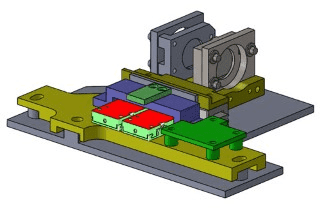
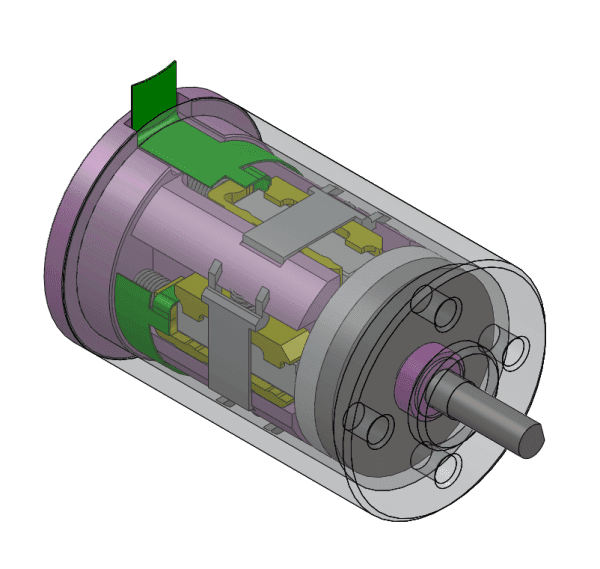
In a linear stage, multiple motor elements are preloaded against a ceramic strip (the rail). The preload force is critical: too little and the fingers skip, too much and the motor stalls or wears prematurely. The rail surface is typically alumina (Al2O3), chosen for its hardness and consistent friction coefficient.
Speed and force characteristics
Ultrasonic piezo motors have an unusual speed-force curve compared to electromagnetic motors. At zero load, the motor runs at its maximum speed (typically 150-300 mm/s for linear stages). As load increases, speed drops roughly linearly until the motor stalls. This is fundamentally different from a DC motor, where torque and speed have a more gradual relationship.
The practical consequence: you design piezo stages for the loaded condition, not the peak speed. A motor rated at 250 mm/s no-load might deliver only 100 mm/s at your working force. This is normal and expected.
Why this matters for your design
The friction-drive mechanism gives ultrasonic piezo motors a set of properties that no electromagnetic motor can match simultaneously:
Ultrasonic piezo vs. electromagnetic motors
| Parameter | Piezo ultrasonic | DC servo | Stepper |
|---|---|---|---|
| Resolution | < 1 nm | 50-500 nm | 1-10 μm |
| Holding force at rest | No power needed | Continuous current | Holding torque |
| Backlash | Zero | Gear-dependent | Gear-dependent |
| Magnetic emission | None | Significant | Significant |
| Vacuum compatible | Inherently | Special design | Special design |
| Speed range | < 300 mm/s | > 1000 mm/s | 100-500 mm/s |
| Continuous force | 0.4-10 N | 10-1000+ N | 1-50 N |
The operating envelope
Piezo motors occupy a specific region of the precision motion landscape. They excel where you need:
- Sub-micron to nanometre positioning accuracy
- Zero backlash and direct drive (no gearbox)
- Vacuum or cleanroom compatibility without redesign
- Zero magnetic field emission (critical near electron beams, MRI, or sensitive sensors)
- Compact form factor with high stiffness-to-size ratio
- Hold position without consuming power or generating heat
They are not the right choice when you need high continuous speed (>300 mm/s), high continuous force (>10N per axis), or long travel with constant velocity scanning at high throughput. Those applications are better served by voice coils, linear servos, or ironless direct-drive motors.
From motor to stage
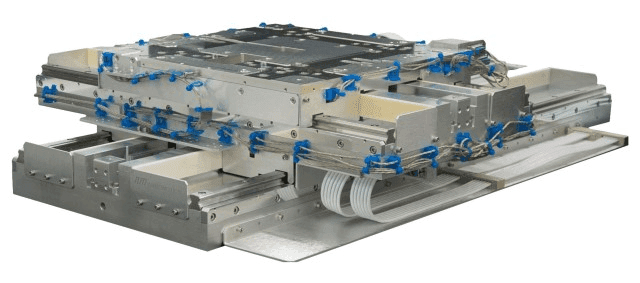
A motor element is rarely used alone. In a complete stage, motor elements are integrated with:
- Bearings: crossed roller, air bearings, or flexures, depending on the application's stiffness and vacuum requirements
- Encoders: optical or capacitive, with resolution from 5 nm down to 0.1 nm for the most demanding applications
- Controllers: closed-loop servo with PID or more advanced algorithms, operating at update rates of 10-50 kHz
- Preload mechanisms: spring or flexure systems that maintain optimal contact force between motor fingers and rail
What to read next
This article covered the mechanism. The next articles in the Fundamentals series go deeper into individual aspects:
- The piezoelectric effect explains the crystal physics in detail
- Resonant frequency, stator design, and motor bandwidth covers what determines the motor's dynamic response
- Closed-loop control of piezo motors addresses encoder selection and servo tuning for these unique actuators
If you are doing a technology comparison right now, the Technology Comparisons section has head-to-head analyses of piezo vs. voice coil, servo, and stepper motors, with specific guidance on which wins for which application.